 by
by What should be in a monthly Facebook ads report – A Sydney business guide that’s on every serious operator’s mind is when they finally twig that their agency is sending fluffy PDFs instead of actually useful commercial intelligence. At Karma Media, we see this all the time – when founders bring in “reports” that conceal the real damage being done by poor audience targeting, weak ad creatives, and misaligned objective settings. Loads of businesses come to us after butting up against Facebook marketing in Sydney because their previous reports just didn’t give them a clue what was actually going on inside their Meta campaigns.
A monthly report isn’t just a formality – it’s a live performance audit of your whole acquisition engine – it shows whether your landing pages, ad creatives, targeting and ad spend are actually working together to make you some revenue. And if you’re not getting any clarity from a report, then it’s basically costing you money.
Contents
- 1 The Numbers That Actually Influence Profit
- 2 The Non-Negotiable Metrics Every Report Must Include
- 3 How To Interpret Paid Traffic Economics Accurately
- 4 How Structure Shapes Results
- 5 Creative Performance And Testing Insights
- 6 Landing Page And Funnel Diagnostics
- 7 Audience Behaviour And Targeting Signals
- 8 Attribution And Data Transparency
- 9 Budget Allocation And Scaling Recommendations
- 10 What A High-Quality Monthly Breakdown Looks Like
- 11 What A High-Quality Report Actually Looks Like
- 12 Strategic Close
- 13 FAQ
The Numbers That Actually Influence Profit
A monthly report is your commercial scoreboard – your system for keeping track of progress. In Sydney’s competitive ecosystem, you can’t afford to be guessing whether your audience targeting, campaign objective, or daily budget is actually aligned with your business goals. Loads of brands are investing in Facebook marketing in Sydney, but only discover major efficiency leaks once a proper monthly breakdown shows ’em weak Conversion rates, rising cost per click, or inefficient ad formats.
A report that’s been built from the ground up with real intelligence – not just a template – will give you the confidence to scale deliberately and not just hope for the best.
The Non-Negotiable Metrics Every Report Must Include
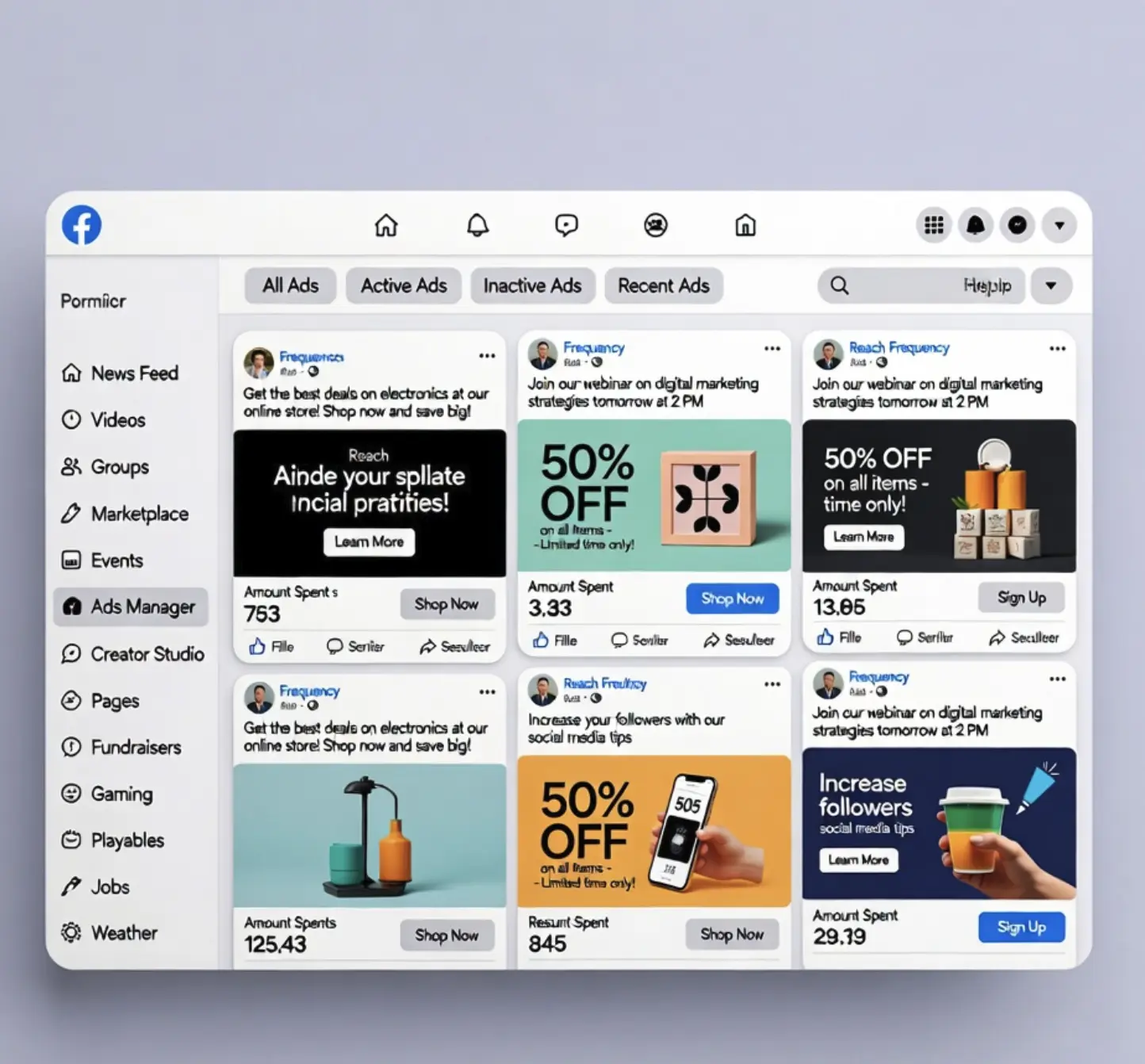
When founders open a monthly report, the first thing they should do is look beyond the so-called “vanity numbers“. Most agencies will fill their PDFs with impressions and clicks. Still, Karma Media? We are more interested in metrics that actually matter to businesses competing through Facebook marketing in Sydney.
What you really want to know about is:
- Your Conversion rate
- Your CAC and CPA
- Your ROAS
- Your contribution margin after ad spend
- How accurate is your pixel tracking?
- Whether your custom conversions are firing as they should be
- How your landing pages are performing
- Any trends in your cost per click across campaigns
Sydney advertisers who are shelling out big bucks for premium CPMs need to know the real economics behind every conversion – not just chasing after surface-level metrics.
How To Interpret Paid Traffic Economics Accurately
A report from Meta that isn’t just spewing out data – it’s trying to interpret it for you. Without context, many Sydney founders are just winging it, adjusting budgets or pausing ads that are actually winning because they can’t see how audience targeting, ad fatigue, split testing outcomes, and landing page friction are all influencing what we regularly see Sydney businesses struggling with Facebook marketing results.
At Karma Media, we tell our clients straight out:
You can’t scale properly if your contribution margin is thin. And Facebook marketing in Sydney becomes a very expensive game if your landing pages are not converting cold traffic effectively.
Your report needs to show you:
- Whether CAC aligns with what you can afford.
- Where Conversion rate failures are coming from – is it the traffic quality or is it the landing page that’s at fault?
- Whether your retargeting campaigns have enough audience volume.
- Whether Meta’s delivery is being held back by weak creative diversity.
Without all that clarity, every optimisation decision is just a wild stab in the dark.
How Structure Shapes Results
A serious monthly report lays out the campaign structure that’s driving your results. Most of the issues in Meta advertising can be traced back to flawed structural decisions – not just bad luck. We see this all the time at Karma Media when we’re auditing Facebook marketing in Sydney.
Campaign Flow Summary
| Funnel Stage | Objective | Targeting Approach | Creative Style | KPI to Watch | Scaling Constraint |
|---|---|---|---|---|---|
| TOF | Brand awareness or Sales | Broad targeting | Pattern-interrupt video | CPM, CPC | Ad fatigue |
| MOF | Sales | Retargeting campaigns | Proof-driven creatives | ATC rate, CPC | Frequency saturation |
| BOF | Sales | Warm remarketing | Offer-led ads | Conversion rate, ROAS | Limited audience size |
| Retention | Sales | Existing buyers | UGC + dynamic catalogue assets | Repeat purchases | Diminished relevance |
When a business struggles with Facebook marketing in Sydney, the cause is often visible in this structural breakdown — not in the top-line numbers.
Creative Performance And Testing Insights
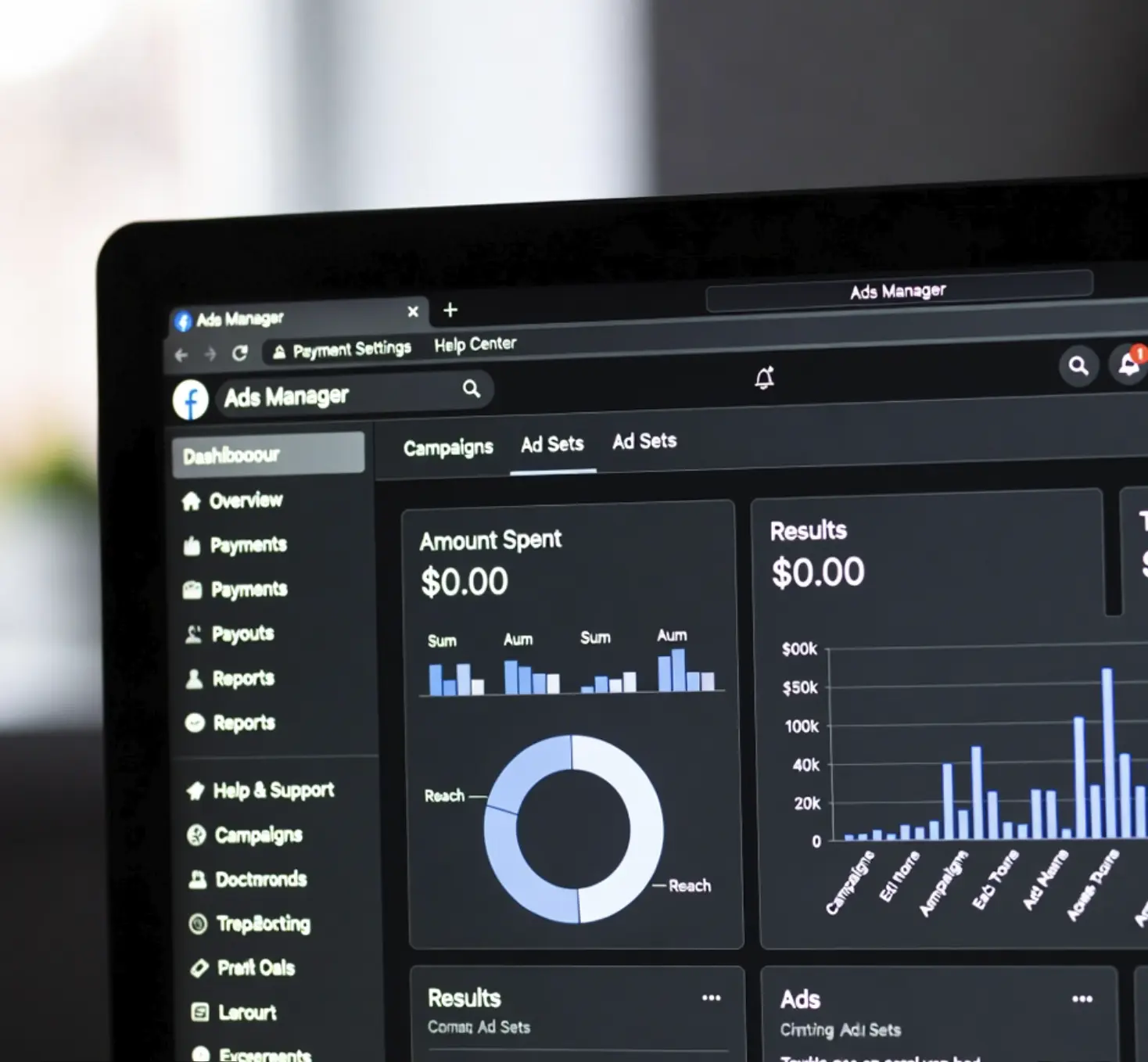
Creativity is the lifeblood of ad performance on Meta platforms – and that’s why our reports don’t just tell you how your ads are doing, they point out exactly why
Your monthly report should include some key stuff:
- What split testing told us
- How our creative testing pipelines are working
- The top 3 winners and losers in ad creative so far this month
- Signs that your ad fatigue is taking hold
- A clear plan for the next month
At Karma Media, we regularly see Sydney businesses struggling with Facebook marketing you’ll still because they’re not mixing up their creatives enough to keep their CPMs stable and conversion rates healthy.
Landing Page And Funnel Diagnostics
Don’t even think about judging your ad performance without looking at how your landing pages are performing. After all, if your landing pages are a mess – slow to load, with a wonky offer, or a user experience that just doesn’t flow – no amount of media buying can make up for it.
Your report should give you the lowdown on:
- How fast your pages are loading
- Where users are scrolling off to
- The click-to-purchase flow that’s working (or not)
- Whether your ad creative and landing page messaging are saying the same thing
- Is your catalogue feed up to par?
- Are your pixel and custom conversion metrics on track?
Even if you’re media buying like a pro, you’ll still plan for the future and run into trouble if your landing page is a disaster.
Audience Behaviour And Targeting Signals
With machine learning driving most of Meta advertising these days, you need a report that tells you what’s really going on with your target audience – how they’re behaving inside your funnel and how the competitive landscape in Sydney is affecting your CPMs, conversion rates and audience segmentation.
Here’s what you can expect to see:
- What’s happening when users are on the site
- How is your retargeting pool growing
- The nitty-gritty on segmentation
- How are your ads doing on different Meta platforms
- Which audiences are converting best at which stage of the funnel
We often see businesses doing Facebook marketing in Sydney getting caught up in trying to add more targeting complexity when the real issue is that their creative just isn’t up to snuff, or their landing pages aren’t aligned correctly.
Attribution And Data Transparency
Attribution is the key to making decisions that actually protect – or destroy – your margin. That’s why your monthly report needs to be transparent about
- Which attribution window was used
- How Meta’s numbers compare to what you’re seeing in Google Analytics
- MER and blended CAC – what do these numbers really mean?
- Are your pixel tracking metrics clean?
- Do your results actually reflect real sales, or is it just platform credit?
Far too many Sydney businesses come to Karma Media because their previous agency was fudging the numbers and hiding attribution gaps in plain sight. Real reporting fixes that.

Budget Allocation And Scaling Recommendations
You can’t just put out a report without a plan for the future, with no blended metrics, and call it a day. That’s just reading history, and that’s not going to cut it. When our Sydney clients here at Karma Media get their monthly reports, they need to see how to scale up, where to shift that budget, and which audiences need some new creative if they’re going to keep growing.
You’ll need to include in your report
- Places where a daily budget increase is actually justified
- Which Meta campaigns can safely scale without going over the edge
- Areas where ad fatigue is going to be a problem for future ROAS
- Time to start testing out some new ad formats
- Where the conversion rate bottlenecks are and what needs to be done to fix them
Sydney’s cost environment is pretty unforgiving when it comes to reckless scaling. Having clear reporting in place is what keeps that from happening.
What A High-Quality Monthly Breakdown Looks Like
If your client is seeing any of these things, then it’s probably time to start questioning your agency:
- Zero mention of Conversion rate
- No analysis of the funnel or the landing pages
- No breakdown of who the audience is and how you’re targeting them
- No commentary on ad fatigue
- No explanation for the low-quality traffic
- No roadmap for creative testing
- Only ROAS from the platform, with no blended metrics, is being used.
This is exactly why so many founders are looking for Karma Media after getting burned by low-value reporting in Facebook marketing in Sydney.
What A High-Quality Report Actually Looks Like
A good monthly Meta advertising report will include:
- Solid, hard data on performance
- Clarity on what the audience behaviour is telling you
- Some real insights into the creative
- Analysis of the funnel
- Scaling recommendations
- Commercial logic that ties back to the business goals
This is the difference between a real acquisition strategy and just “running ads around and hoping for the best“.
Strategic Close
A monthly Facebook ads report is just an audit of your whole acquisition system – it’s not just a recap of impressions. For Sydney brands trying to navigate this increasingly competitive and pricey ad environment, proper reporting will determine whether you scale profitably or just lose money slowly. With Karma Media, our clients get to see the truth behind their ad performance – and why their Facebook marketing in Sydney is either going to scale or stall.
FAQ
How long should a monthly Facebook ads report be?
Just long enough to give you some meaningful insights – not too long. Typically, around 4-8 pages full of clear performance data and some actionable recommendations.
Should I be optimising for ROAS or MER?
Do both. ROAS is good for checking that the platform is working efficiently; MER is what gives you a look at the whole business economics. You should be including both in your monthly report if you want to make informed decisions.
How often should creative testing be reviewed?
Every month. You’ll start to see ad fatigue set in pretty quickly in Sydney’s competitive environment – especially if you’re running TOF prospecting.
Why does attribution vary so much?
It’s because different attribution windows will allocate credit differently. You’ve got to account for custom conversions, time-delay purchases, and cross-device behaviour, or you’ll end up with all sorts of discrepancies.
Should landing pages be part of my monthly reporting?
Absolutely – landing page friction is a major driver of poor Conversion rates, even if your audience targeting is spot on.