
How to tell the difference between a Freshwater and a Saltwater Crocodile – Without getting too close is one of those skills you don’t even think about needing until you find yourself standing there on a muddy riverbank in the Top End, peering into the water, wondering if that log actually twitched. I’ve spent years guiding tourists through places like Katherine Gorge and the Daintree River, and the truth is – getting this wrong is an experience you won’t get to have more than once.
We’re looking at two very distinct species of crocodile here: the Freshwater Crocodile (Crocodylus johnstoni) and the notorious Saltwater Crocodile (Crocodylus porosus), also known as the Estuarine Crocodile. Sure, they look the same at first glance – prehistoric in appearance – but their temperament, the kinds of places they like to hang out, and the actual danger they pose are light years apart.
Contents
- 1 Why This Stuff Actually Matters in the Real World
- 2 The Key Things to Look Out For From A Safe Distance
- 3 Getting the Answer in a Flash with Snout Shape
- 4 A Funny Story From My Guiding Days
- 5 Behaviour Helps When You Can’t See It
- 6 Where You Are Helps You Figure Out What’s Lurking
- 7 Why Size Alone Is No Guarantee Of Safety
- 8 Skin, Build And That Armoured Look
- 9 Feeding Habits
- 10 Seasonal Changes Shift The Risk Level
- 11 The Cultural Significance You Can’t Ignore
- 12 The Safest Way To See Crocodiles Up Close
- 13 Conservation And The Science Behind It All
- 14 The Struggle Is Real For Baby Crocs
- 15 A Quick Reality Check Before You Head Out To The Water
- 16 Common Mistakes People Make
- 17 Stay Sharp, Stay Safe & Treat Crocs With Respect
- 18 FAQ
Why This Stuff Actually Matters in the Real World
You don’t have to be a wildlife expert to stay safe in a country like this, but you do need a rough idea of what to expect when it comes to crocodile behaviour and where you’re standing. Out in the north of Australia, being croc-wise is just part of the territory.
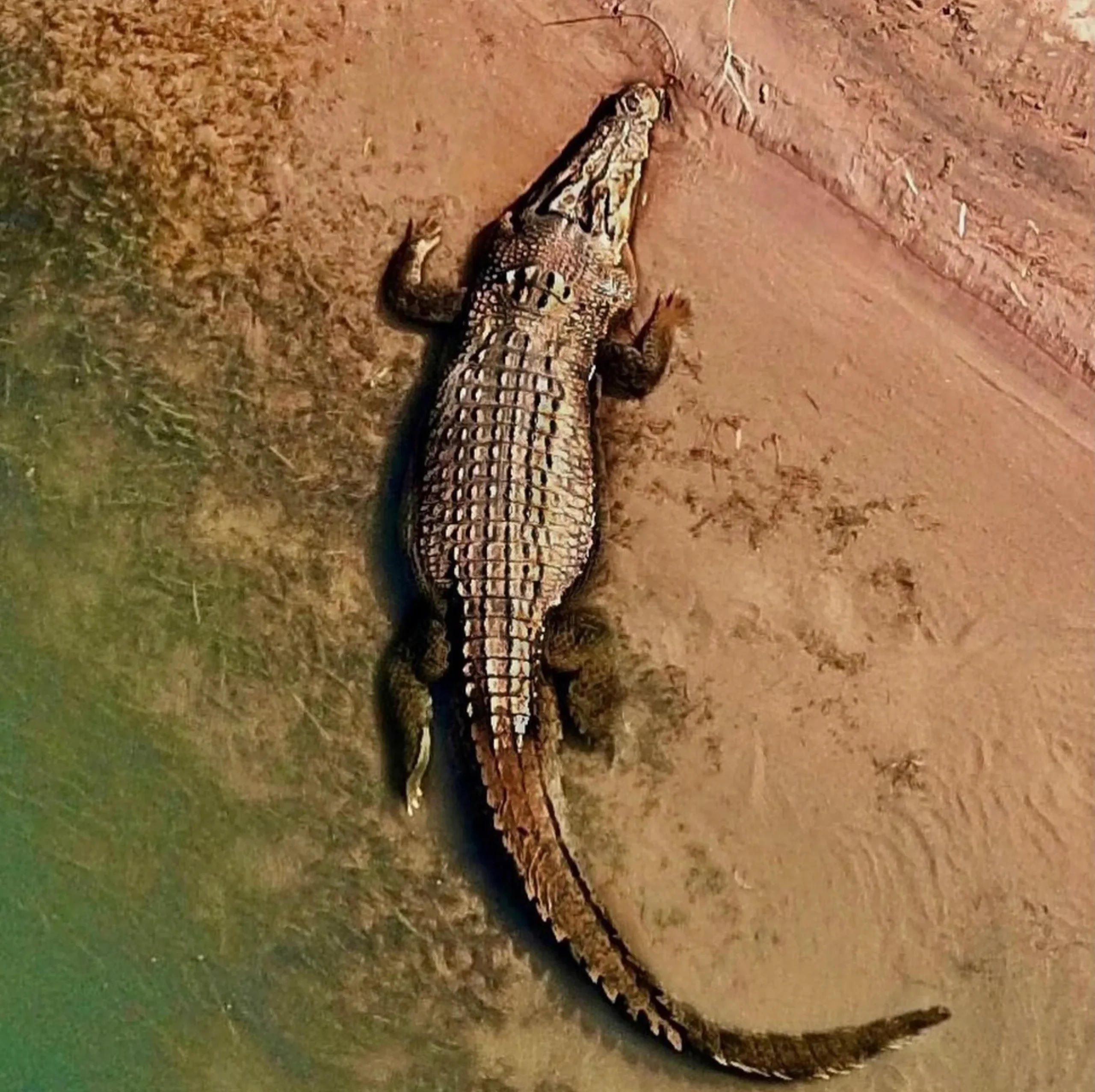
Saltwater crocs are the big boys. Males can grow up to 6 metres long and weigh over 1,000 kilos, making them the biggest reptile on the planet. Freshwater crocs are a lot smaller – 2 to 3 metres is about the norm, and you’re a lot less likely to have a problem with them.
Australia’s Saltwater crocodile population is a whopping 100,000+ – and that’s thanks to the conservation efforts that really kicked in back in the early 1970s. That’s a good thing, but it also means you need to be on the ball whenever you’re near the water.
The Key Things to Look Out For From A Safe Distance
You don’t need a pair of binoculars or a degree in zoology to spot the differences. There are a few pretty obvious things to look out for that make all the difference – and they really do.
| Feature | Freshwater Crocodile (Crocodylus johnstoni) | Saltwater Crocodile (Crocodylus porosus) |
| Snout Shape | Long, narrow, pointed | Broad, thick, heavy |
| Size | 2–3 metres | 4–6+ metres |
| Build | Slender | Thick, powerful |
| Skin | Lighter, smoother bony skin | Heavily armoured bony skin |
| Risk Level | Low (but not harmless) | Extremely dangerous |
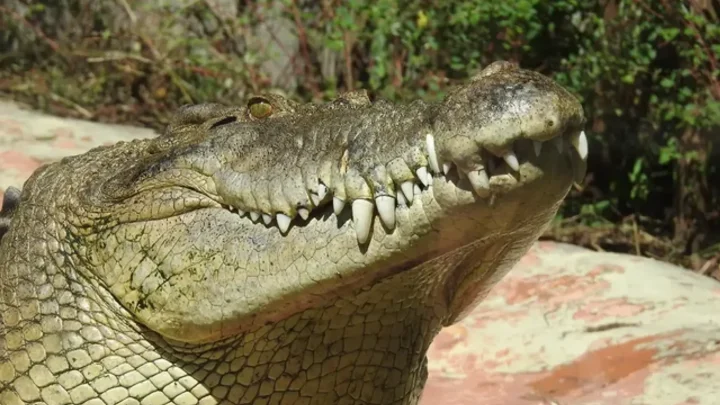
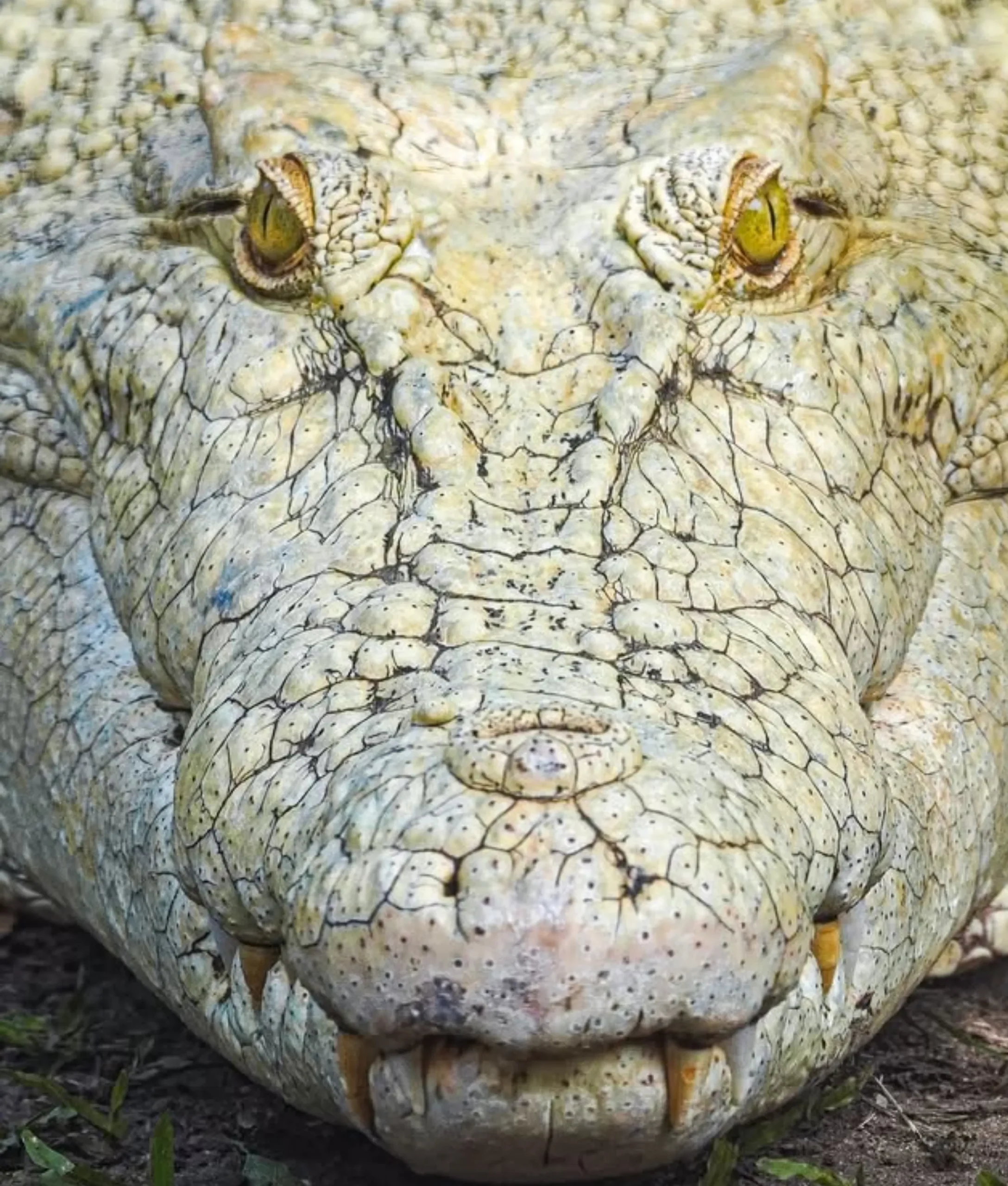
If you can remember only one thing, let it be this: A long, skinny snout is a freshwater crocodile, while a short, wide snout is a saltwater crocodile.
Getting the Answer in a Flash with Snout Shape
This is your fast track field check – and it nearly always works.
Freshwater crocs have an incredibly thin, pointy snout, built specifically for snatching up fish out of the water. Saltwater crocs, on the other hand, have a broad, power-packed snout designed to get a real grip on whatever they are grabbing.
A Funny Story From My Guiding Days
I was out with a group at Katherine Gorge one dry season, when someone pipes up and says, “That little bloke looks harmless, must be a freshwater croc.” No, mate, I know a saltie when I see one, even though its snout isn’t looking all that big & wide – Just eyeball the width of the snout, you’ll get the answer. We gave it some space, no arguments.
You don’t get marks for curiosity out in the bush.
Behaviour Helps When You Can’t See It
You won’t always see the whole crocodile – sometimes it’s just a ripple, a bubble, or a pair of eyes breaking the surface. That’s when knowing what crocs are like to observe becomes your most valuable tool.
Generally, you can expect freshwater crocs to run for it the moment they sense you – they’re a bit shy. Saltwater crocs? Well, they’ll just sit back and watch you – or sometimes they’ll creep in, very quietly.
They’re stealthy predators – that’s just how they hunt.
By the way, you’d think that with all the crocs we have in Australia, we would see more attacks – but no, by all accounts it’s a pretty rare occurrence – usually no more than 1 or 2 every year – and when it does happen it’s usually a saltwater croc involved. Don’t underestimate them, that’s all I’m saying.
Where You Are Helps You Figure Out What’s Lurking
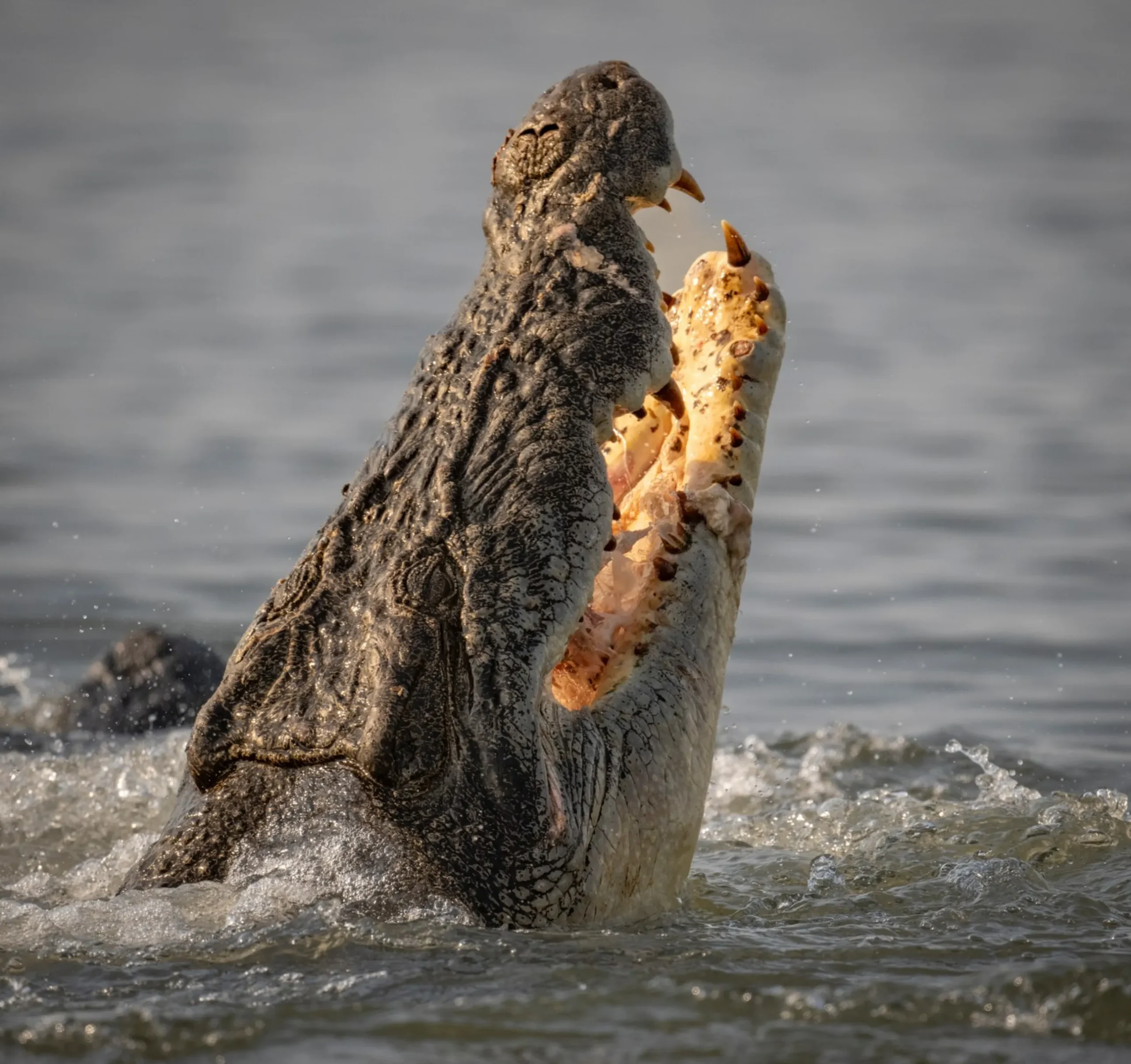
If you can’t see the croc for yourself, take a good, hard look at the environment. Crocs like certain sorts of places.
Freshwater crocs seem to prefer:
- Long straight rivers
- Rocky gorges – like Katherine Gorge
- Freshwater systems with clear water
Saltwater crocs, though, they’re happy in pretty much any sort of place:
- Estuaries – where the river meets the sea
- Floodplains – where the river flows widely
- Near the coast
- Freshwater rivers a long way inland – like the Daintree River
People make a mistake here – they think that because the water is clear and the rivers are small, they’re safe from crocs. Not on your life – during the wet season, water flows everywhere. Don’t assume anything. I’ve seen saltwater crocs hundreds of k’s inland after a big wet, they don’t play by the rules.
Why Size Alone Is No Guarantee Of Safety
One of the biggest mistakes that travellers make is thinking that small equals safe.
A juvenile Crocodylus porosus can be under 2 metres and still be a handful – size just isn’t the most reliable indicator. What really matters are their behaviour and habitat.
When you’re dealing with a crocodile, just keep your distance. It’s really that simple.
Skin, Build And That Armoured Look
If you’re lucky enough to be on a guided boat cruise with Wildlife Tours, you might notice the difference in build and skin from a safe distance away.
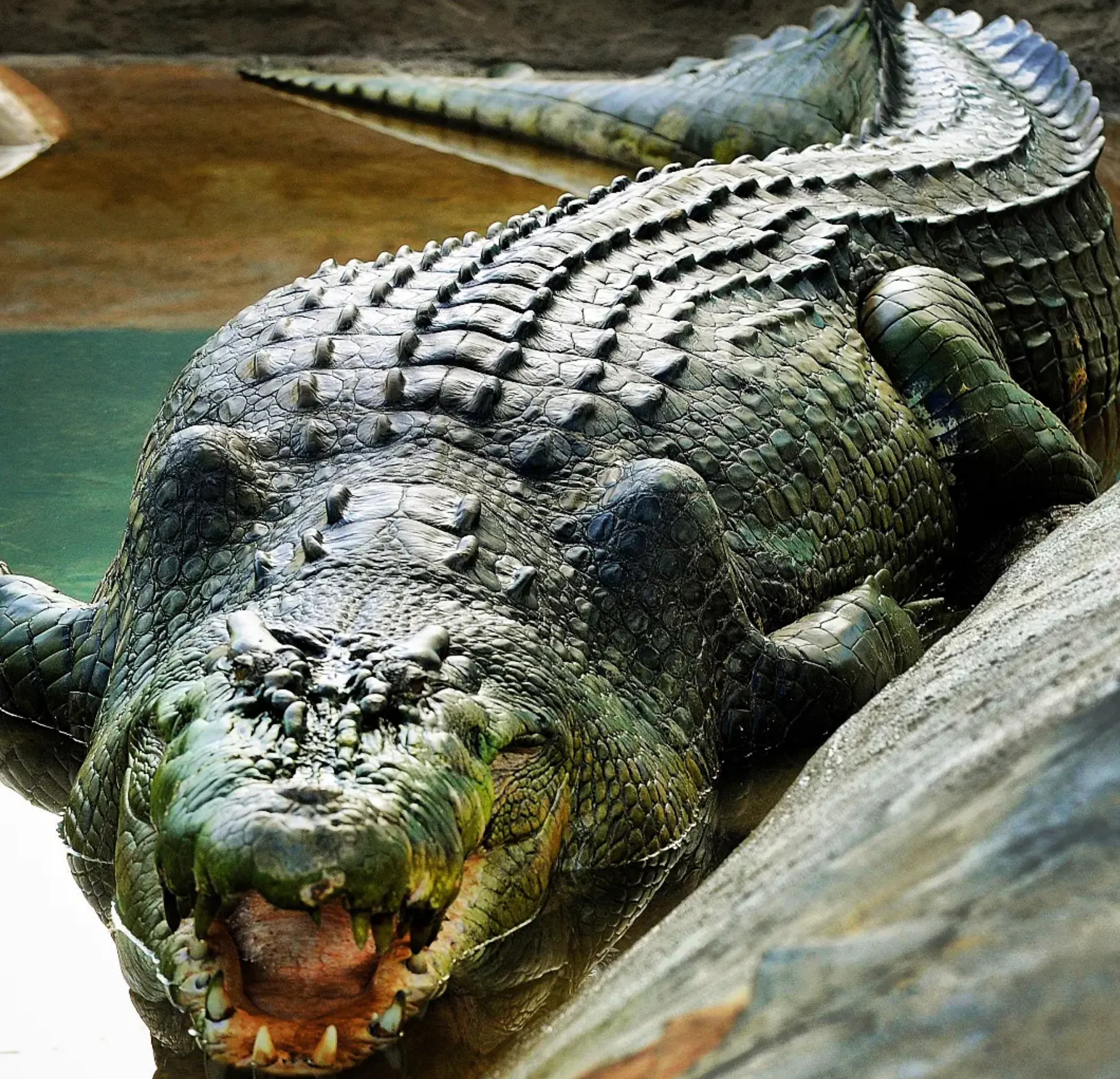
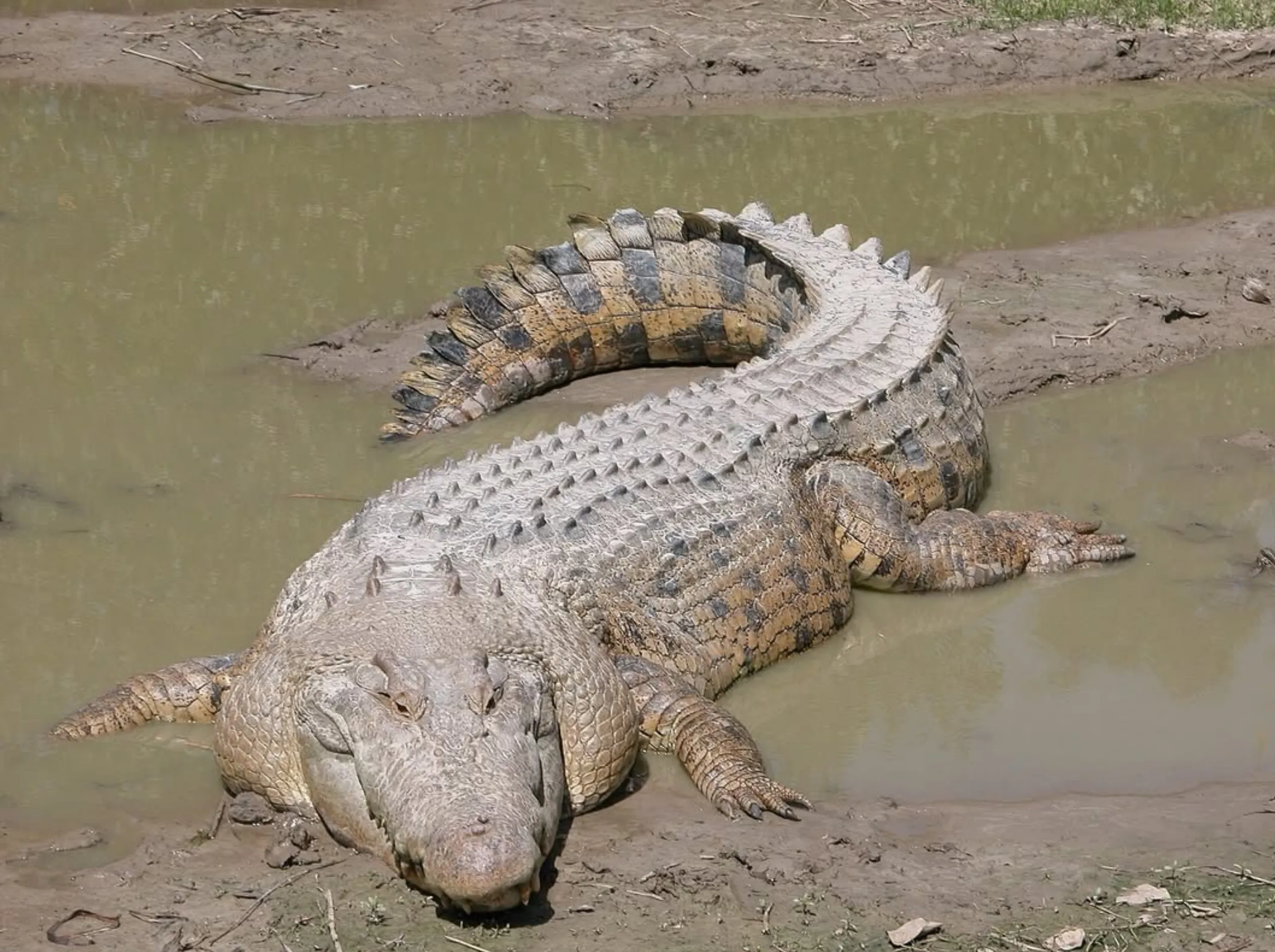
Freshwater crocs tend to look a bit lighter, more streamlined. Saltwater crocs are bulkier with this thick, plated bony skin that acts like a suit of armour. It all makes sense given their status as dominant predators in their environment.
And if you think you can see all that detail from the bank, you’re probably a whole lot closer than you should be.
Feeding Habits
Understanding what a crocodile eats really gives you a good idea of how each species behaves.
Freshwater crocs are pretty simple – their diet mainly consists of:
- Fish
- Insects
- Small animals
Saltwater crocs, on the other hand, are a bit more opportunistic. Their diet is:
- Fish
- Birds
- Mammals
- Larger prey if they can get it
They don’t go hunting all the time – but when they do, it’s fast and deliberate.
Seasonal Changes Shift The Risk Level
Northern Australia doesn’t really do four seasons – it’s more a case of wet and dry. And let me tell you – the crocodile’s behaviour shifts with it.
When it’s wet:
- Waterways expand
- Crocodiles move around a lot more
- Visibility drops
When it’s dry:
- Waterways shrink
- Crocs tend to stick to their territory
- Territory becomes a lot more important
The rangers are on top of it – they monitor high-risk areas, and sometimes they even use crocodile traps to relocate problem animals to areas that are a bit less populated.
The Cultural Significance You Can’t Ignore
Crocodiles have deep cultural significance for many Aboriginal communities across northern Australia. They’re part of their Dreaming stories and represent power, survival and connection to the land.
If some local advice or Traditional Owners tell you to steer clear of the water – listen to them. That knowledge goes a lot deeper than any travel guide.
The Safest Way To See Crocodiles Up Close
If you really want to see crocodiles in action – do it the right way – on a guided experience.
A boat cruise along a river like the Daintree gives you a front row seat to real crocodile behaviour without putting yourself in harm’s way. Trust me, it’s a lot safer and more interesting than trying to guess what’s going on from the riverbank.
We always recommend going with a Wildlife Tours operator – they know the waterways inside and out and know exactly where to find the crocs.
Conservation And The Science Behind It All
Crocodiles were nearly wiped out by hunting, but since the introduction of protection laws in 1971, their numbers have begun to bounce back strongly.
Modern conservation efforts for crocodiles nowadays involve:
- Keeping an eye on populations to make sure they’re thriving
- Protecting their habitats so they can live in peace
- Carrying out research, including genetic studies, to get a better understanding of them
- Educating the public about safety – it’s a big part of it all.
The Struggle Is Real For Baby Crocs
When baby crocodiles hatch out its still a pretty tough time for them – for now at least
- They usually hatch out in the wet season
- The females are very protective and will chase off anyone trying to get too close to the nest
- Sadly, a lot of baby crocodiles won’t make it – childhood can be pretty brutal for them.
A Quick Reality Check Before You Head Out To The Water
Before you even think about getting into the water in an area with crocs, take a minute to think about this:
- Have there been any warning signs about crocs in the area?
- Is the water tide affected or flowing into the ocean?
- Has there been any recent flooding or high water levels?
- Are there any slide marks or tracks on the bank
If something doesn’t feel right, just don’t take the risk.
Common Mistakes People Make
Over the years Ive seen a few things that people do which are just plain silly or perhaps even a bit reckless
People often:
- Assume that because its freshwater crocs are completely harmless
- Overlook any warning signs or clues that might be there
- Get too close to take a snap because they think it’s a good photo opportunity
- Just go for a swim without checking the conditions first
But it really isn’t that hard the other way around.
- Keep the environment in mind
- Stick to designated areas where it’s safe
- Just listen to the locals, they know things you dont
- And put some distance between you and the critters
It’s not fear – it’s just being aware of what you are dealing with.
Stay Sharp, Stay Safe & Treat Crocs With Respect
At the end of the day, figuring out whether that critter in the water is a freshwater croc or a saltie is basically down to a few key things: snout shape, the way it acts, and where you find it.
You really don’t need to overthink it that much.
If you’re still unsure, just take a step back. If it’s a big slobbering saltwater crocodile, then it probably is. And if you find yourself out in the bush, just assume there might be crocs around – because the truth is they usually are.
Spending years driving along dusty tracks and walking along riverbanks has given me one pretty clear lesson: the bush respects those who show some respect and punishes the clueless – so just be smart, trust your instincts, and you’ll be in for a ripper of a trip.
And if you want to get a proper look at crocs from a safe distance with someone who actually knows what they’re doing, then get on a Great Ocean Road day tour and ditch the guessing game.
FAQ
Are Freshwater Crocs completely harmless?
Absolutely not – they’re pretty shy and not a huge risk, but if they feel threatened, they’ll bite you just the same. So, they’re worth treating with some respect.
Where do you most commonly find saltwater crocs?
Up in Northern Australia in rivers, estuaries, and coastal systems – places like the Daintree River.
How fast can a croc actually move?
On land, they can get up to 12-14 km/h in a rush, and they’re even quicker in water over short distances.
What does management do to keep everyone safe?
Authorities monitor the population, relocate problematic individuals, and do their best to educate the public to reduce the risk of things going wrong.
Is it ever safe to swim in crocodile country?
Only in areas officially cleared as croc-free by local authorities. Don’t ever assume that a waterway is safe just because you think it might be.